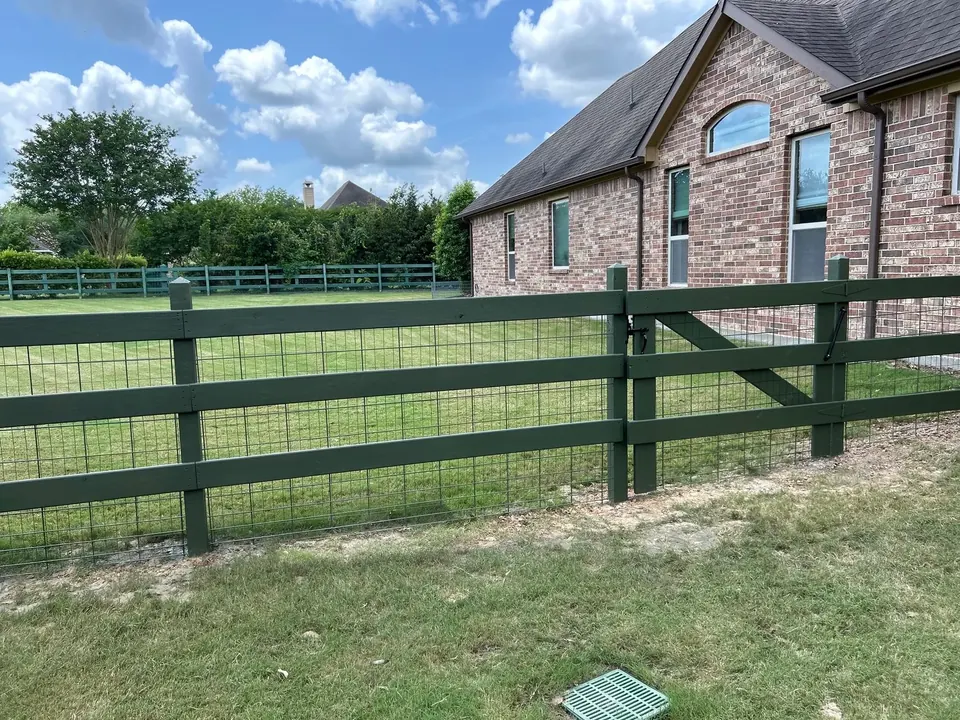
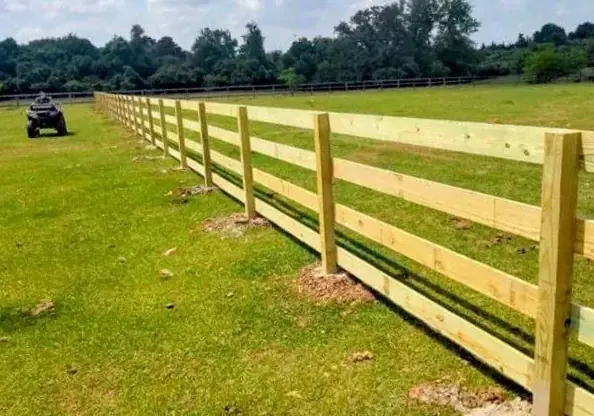
Rail fences we built in Fulshear, one with wire mesh. No-climb photos are coming.
Horses lean, rub and reach over and through fences. A no-climb horse fence uses woven wire with small openings, too small for a hoof to go through, stretched tight between strong posts, usually with a top rail or board so horses can see the line.
What we build
- No-climb woven wire on wood or steel posts.
- A top rail or board for visibility and to keep horses from leaning on the wire.
- Rail fence with mesh where you want the look of wood rail with the safety of wire.
- Cross fencing to split pasture into paddocks.
- Pasture and walk gates, plus entry gates and openers.
Plan it right
- Corners and gates carry the load. They get heavier posts and bracing so the wire stays tight.
- Height. Tell us the size of your horses. Larger horses need a taller line.
- Gates. Measure your trailer and tractor. A gate that's too narrow gets hit.
- Water. Near the Brazos, low ground floods. Tell us where water runs so we can plan the line.
- Animal advice. We build fences; your vet or county extension office is the best source for animal-specific needs.
Cost
Choosing between wire types? See farm and ranch fence by livestock. Want the rail look up front? See split rail.
No-climb fence is priced after we walk the line, because footage, terrain, access and post choice vary so much. Wood rail, for comparison, runs $24 to $33 per foot. See fence costs.
Questions we hear
What is a no-climb horse fence?
Woven wire with small openings, too small for a hoof to step through, stretched between strong posts. It's usually topped with a rail or board.
Can you add no-climb wire to my rail fence?
Often, yes, depending on the condition and spacing of your posts and rails. We'll check during the estimate.
Do you fence pasture west of Fulshear?
Yes: Simonton, Wallis, Brookshire, Sealy, Needville and nearby, with no travel charge.